This is Morning Haunt No. 2 from Persistence of Vision, the letter I send out every week from the Tennessee back roads. It's free. Get it in your inbox →
This is the whole week: the drive-time notes, the numbers, and the stuff that broke.
TUESDAY: CLEANING DAY, AND AN OFFICE OUTSIDE
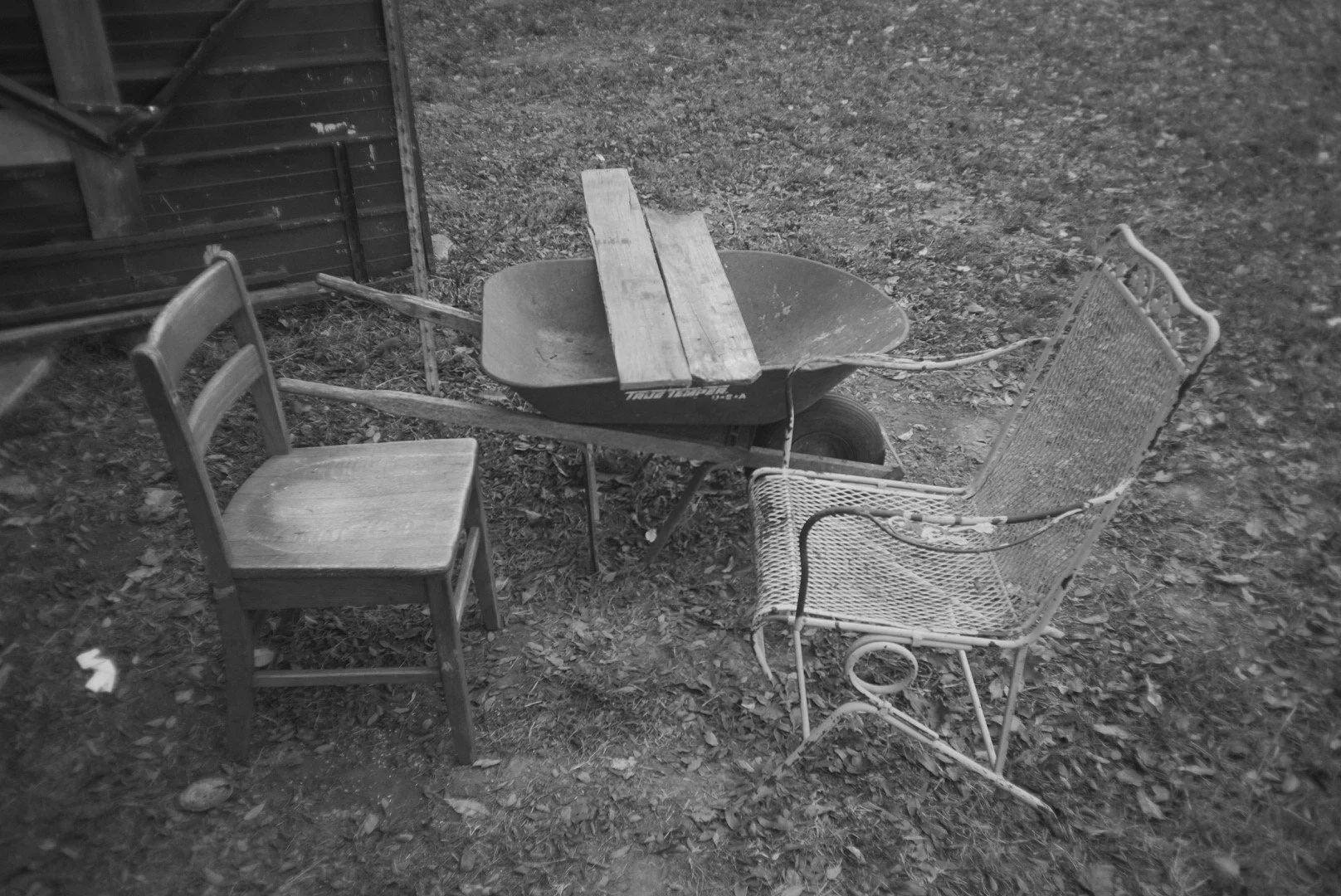
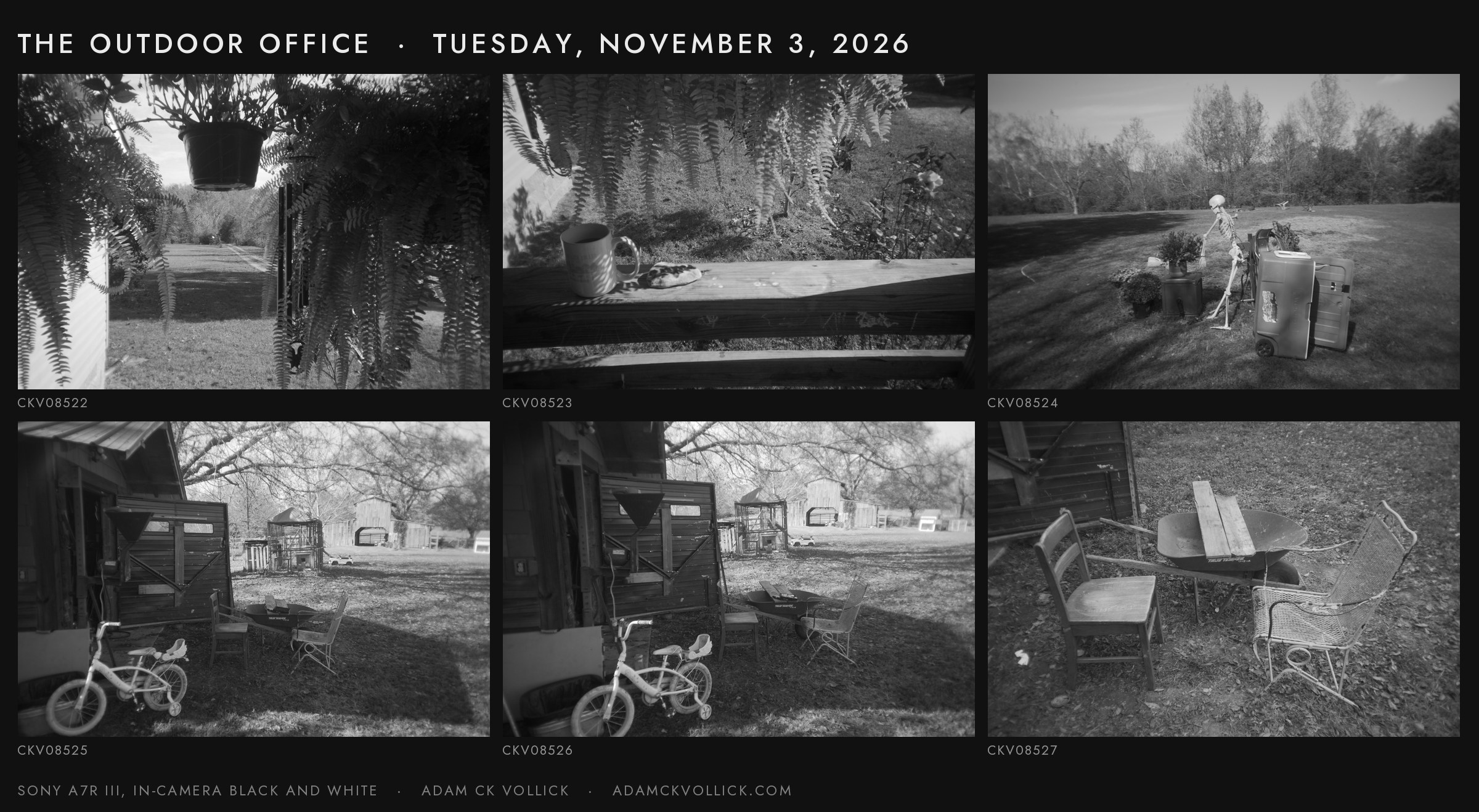
Tuesday was cleaning day. When our cleaning friends are here I like to just stay out of the way, so I carried a white wrought-iron chair across the yard, laid a board across the wheelbarrow, and made myself a little bench desk in front of the tool shed. I had to check which way was more level. Then I sat there looking at that shed and said it out loud into the glasses: "Maybe this could be my office office. Put a little insulation, maybe some heaters, maybe a little sauna off the side over there."
Maybe this could be my office office.
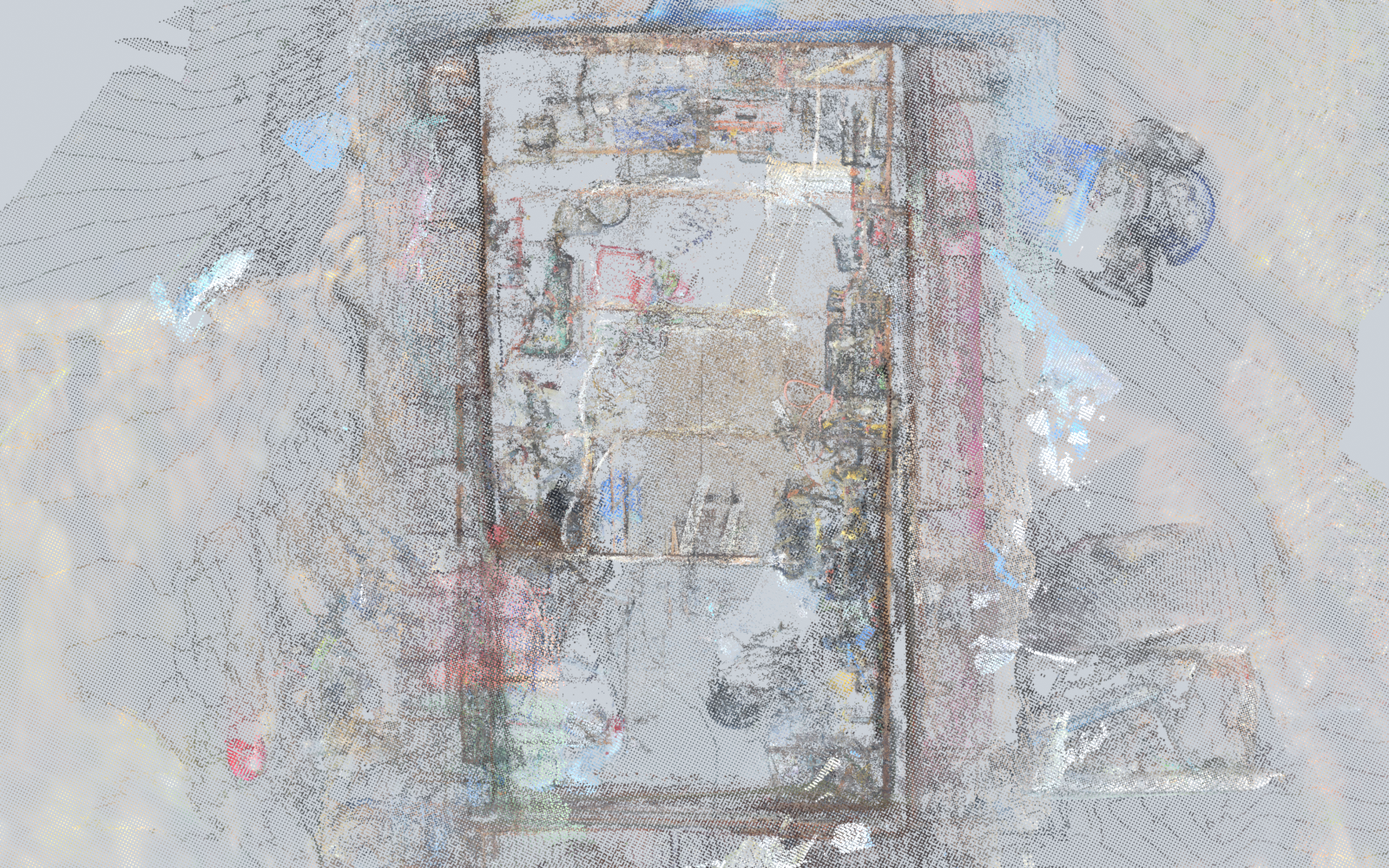
So I asked, right there from the bench, what the easiest free way was to use the LiDAR on my phone to make a 3D model of my tool shed. The answer was Scaniverse. No scan caps, about five metres of reach, go slow and overlap your passes, and treat the scan as a reference, not gospel. I did two scans that morning, the outside as a LiDAR mesh and the inside as a Gaussian splat, then lost a chunk of the morning to an iPad sign-in and the Wi-Fi giving up, which is about right.
By the afternoon Claude Code had squared the two scans to each other, put the inside back inside the outside by matching what both of them saw through the open doors, and built a clean model of the shed in Blender over the top of the scan.
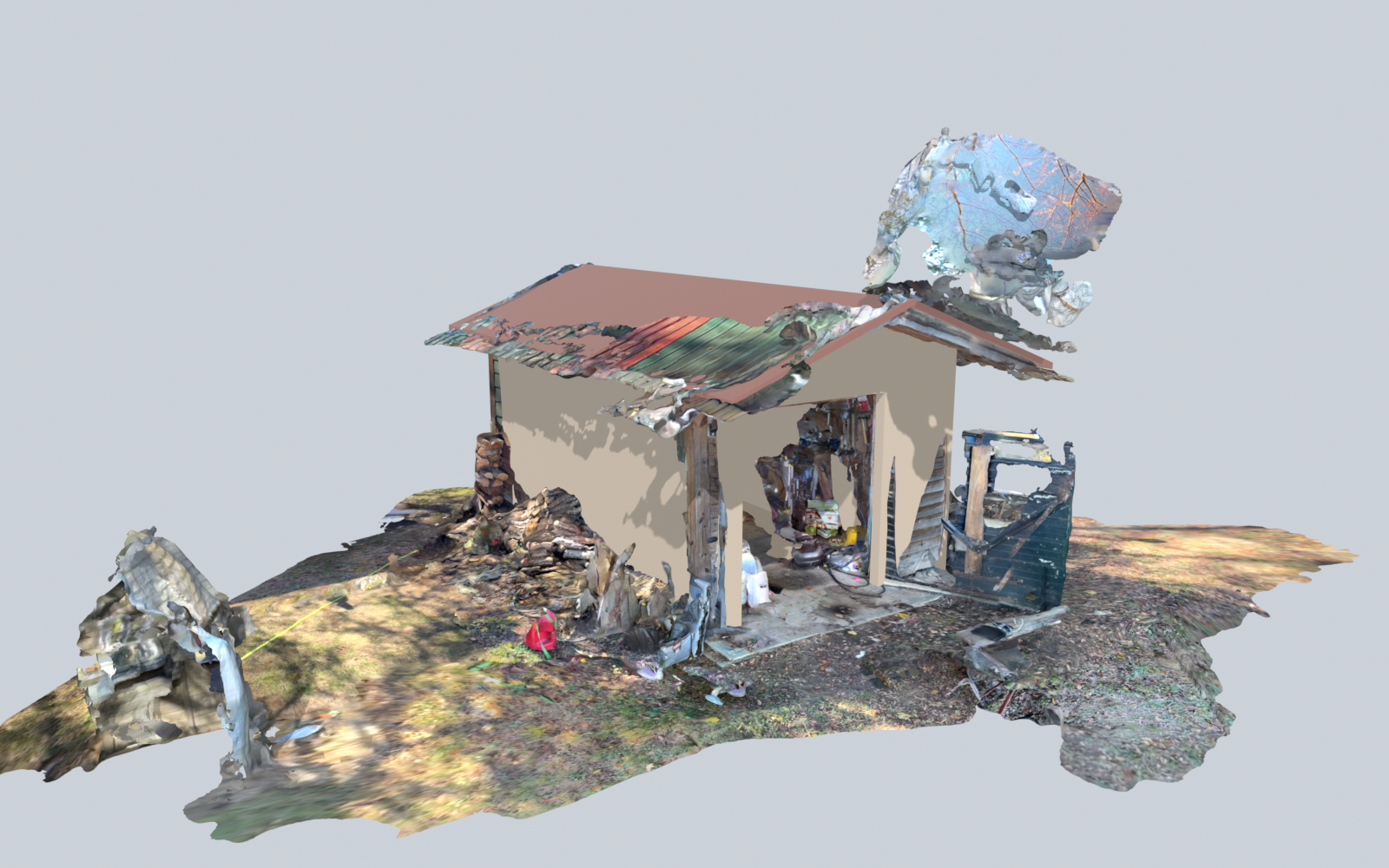
Here's what the shed actually is: 9' 2" by 17' 1" on the outside, 138 square feet inside, 7' 5" floor to ceiling, a 4.5 in 12 roof, a door opening about five and a half feet wide in the south gable. The floor sits flush at the doors and about a foot and a half off the ground at the back. The phone never saw the top of the roof, so the ridge height is an educated guess, and I still owe it one tape-measure check on the long wall.
The plan is a little at a time, on a very narrow budget. First the boring stuff that makes it an office: fix the roof and the walls, sort out the drainage, insulate it, run a small subpanel and a mini split so it works all year. Then the sauna, and I'll definitely do wood-fired, because a wood stove means no 240-volt run out to the shed. The thing is, I have this huge cedar tree right there, so the flue clearance decides where the sauna goes. Before any of it, a call to Dickson County about what an accessory building with a stove needs. Lumber gets priced three ways: the big yards, the rough-cut sawmills around here, and whatever salvage turns up.
THE SPACETIME IDEA THAT CAME OUT OF THE POINT CLOUD
Standing in the yard scanning that shed, I started wondering whether a spacetime painting could be opened up the same way, with the streaks as vibrating strings. One thing came back that I didn't know: when the camera moves through a scene during a long exposure, the length of each streak is a depth map. Near things streak more than far things. The blur already knows how far away everything was.
▶ Watch this clip in the letter on SubstackThe very first one, a first-generation loop: trees from the 2021 series, every point drawn as the streak the exposure made through it.
I don't want 3D recreations. What I want are extensions of the expressive nature of these little film loops, the process being revealed. So these first loops start on the photograph as I made it, use the motion in the blur to guess at the detail that went missing, let the view drift the way the camera drifted, then go back through the painting and land on the original exposure. They're built from six of my five-star frames from the winter and spring 2021 series, shot through a red filter. Here's the river and the cliff. First pass. I haven't even given my notes on it yet.
▶ Watch this clip in the letter on SubstackThe river and the cliff, a reveal loop.
▶ Watch this clip in the letter on SubstackAnd one of me on the bike, a zoom burst from the same winter.
FRIDAY: CODE BUILDS, COWORK WRITES
Last Friday around one o'clock I finally understood why my edits kept failing. I'd been asking one tool to do everything. Claude Code is good at building things, ingesting data and making catalogs. Cowork is good at language and story structure. So now the work moves back and forth between the two. Code builds the timelines, Cowork shapes the story and the words, and I sit in the middle with the final say. This letter is a good example: most of it I said out loud, in the car or the barn, and it got assembled from there.
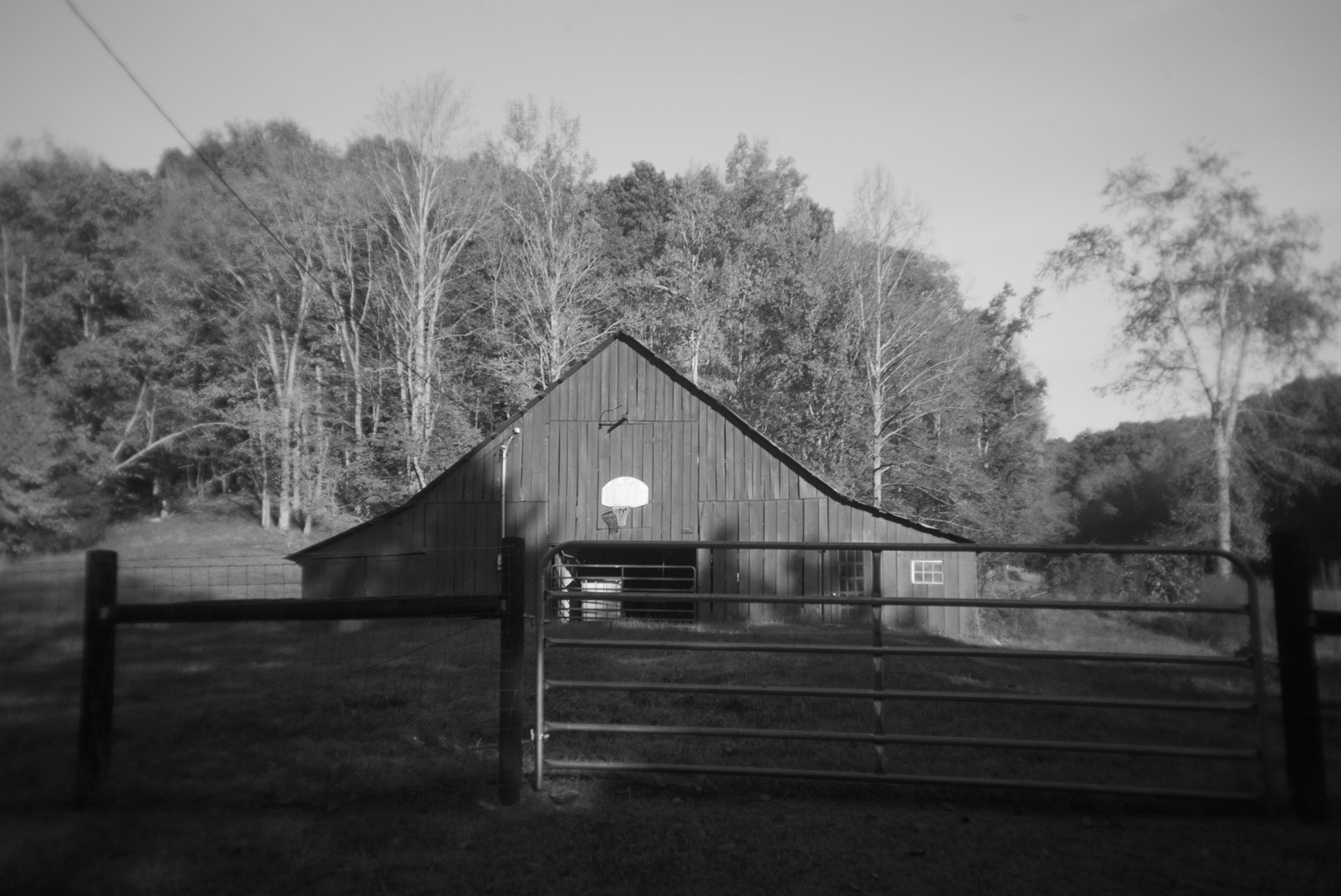
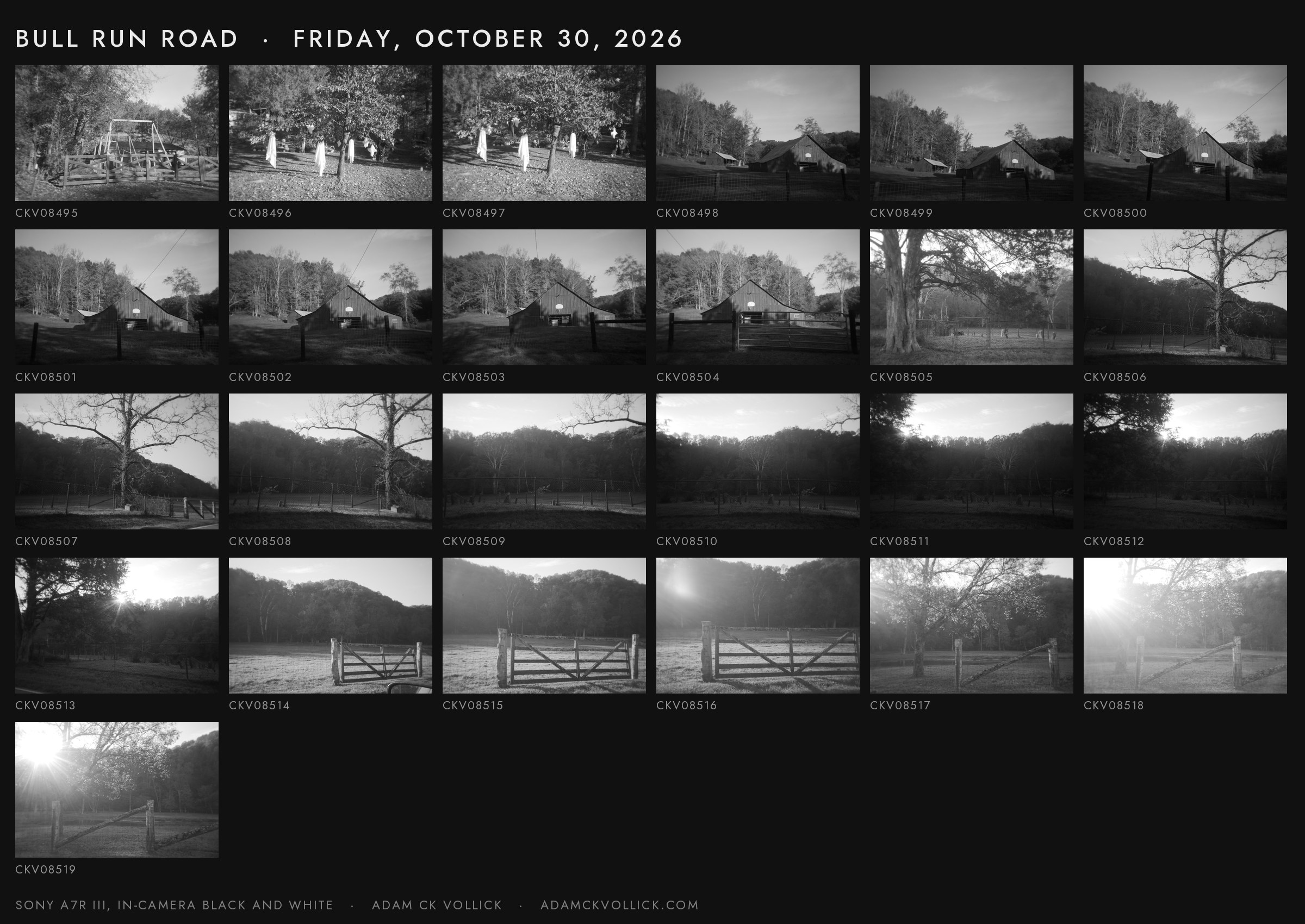
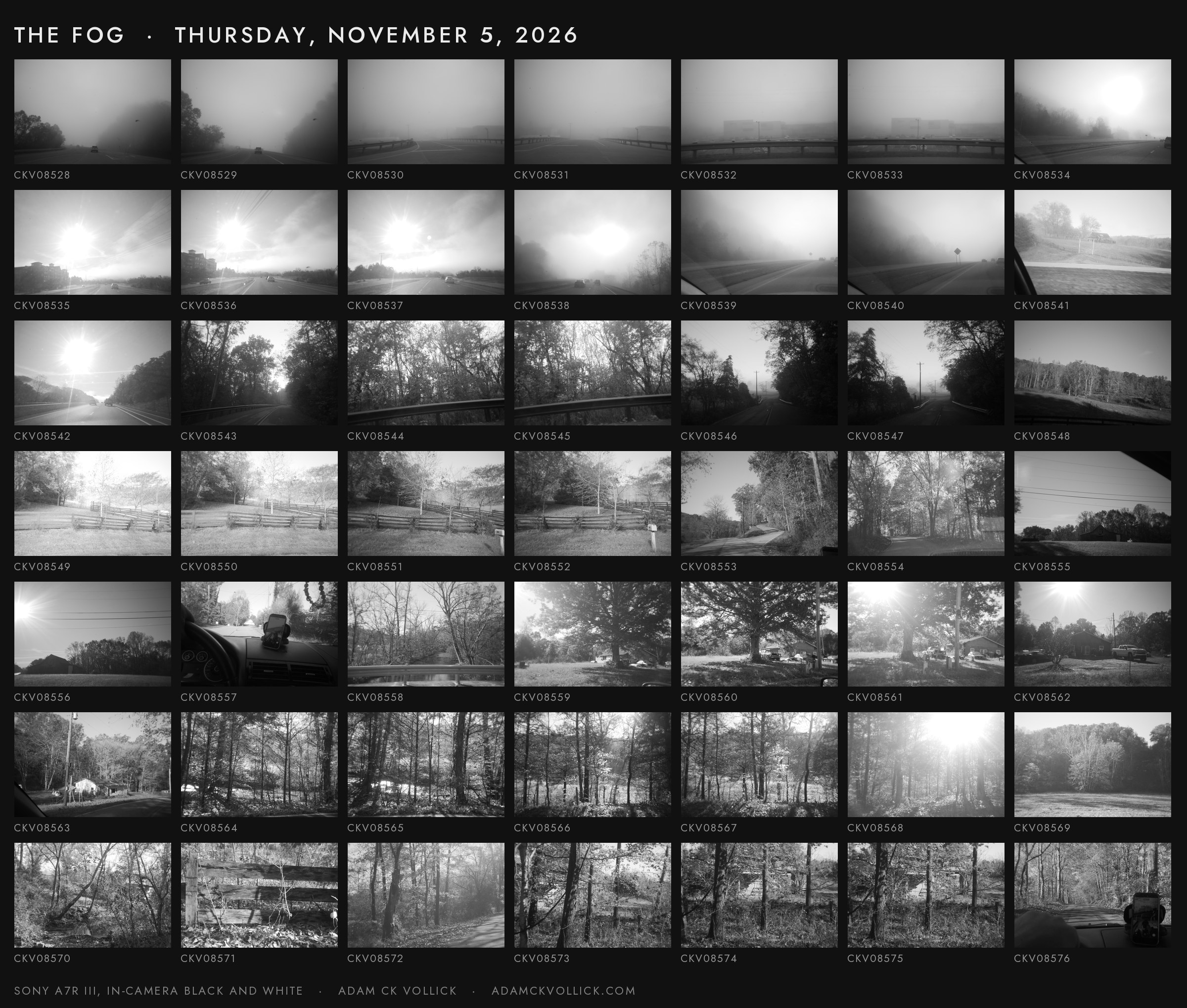
That Friday started on Bull Run Road, in the light I had been waiting on all week. Here is every frame from that morning.
MONDAY: ASKING THE CATALOG
On Monday morning I sat at my desk with the glasses on and asked the catalog to find some long-lost spacetime paintings. I read its answer back on camera: "Let me start from what the catalog already knows," then "rank the folders nobody has touched and make small contact sheets of the best candidates." That's where they'd been all along. Slow shutter speeds on real cameras, in folders that never made it into Lightroom.
The numbers as of this morning: eight drives, about 700,000 files, close to 35 terabytes. The biggest is a 20-terabyte drive called the Threshold of Time Capsule, nearly 400,000 files on its own. Two drives went in this week. One is from the Love Earth tour. The other, Blank Slate, got fully transcribed: 69.8 hours of audio in 188 minutes, with a transcript sitting next to every clip. Where I'd already exported transcripts out of Resolve on past jobs, it read those in too instead of redoing the work, and the Lightroom catalog on that drive got matched back to its files.
The catalog plugs straight into Cowork now, too. I can ask it a question from the same window I'm writing in.
And I talk to it. The glasses and my little voice recorder both feed it. If I say "Claude," it's a command. "Director's note" goes to the edit. "Process note" gets remembered. "Newsletter" gets tagged for this letter. "Keep this out" never leaves the house. The first time we went looking, a whole week of dictated to-dos had been sitting unread, so that alone was worth building.
I also asked whether I need a second brain, a Notion project or something like it. The answer made me laugh: "You already have a second brain. It is in eight places, nobody indexes it, and it has no front door." So the next build is a front door: one inbox, one page that says what's live right now, and a review that runs without me.
You already have a second brain. It is in eight places, nobody indexes it, and it has no front door.
THE EDITING SUITE, IN THE WEEDS
Every note I give on a cut is a numbered rule now, in one file, dated, with the piece that taught it. The newest rule on a subject wins. A few from this week, in my own words:
"The glasses footage looks like ratshit." The glasses shoot HDR, and Resolve was tone-mapping it twice. Now it's one look baked in, and when I said "the highlights still look unnatural," it made four versions and I picked D.
Resolve had been quietly squashing every highlight to about two thirds of white because of an HDR default on custom timelines. Found it, fixed it.
"Construct the string out with all the stills and iPhone and glasses synced, insert the hyperlapses where they go with no sound underneath them." Done. A hyperlapse now drops in at the moment it started and pushes everything after it down the line.
When I record on the glasses and the phone at the same time, I say "sync this footage," and it lines them up by listening to both instead of trusting their clocks.
The one I'm keeping: on a recent string out I said, "very great job putting the photographs exactly where they belong, so let's keep that up." Each frame lands one second after the shutter, over the sound of the moment.
I cut from those string outs on the iPad now, in a Resolve cloud project, so I can work from the couch or the barn.
WEDNESDAY AND THURSDAY: MUSHROOM ROCK AND THE FOG
Wednesday I went looking for a rock shaped like a mushroom off Dry Fork Road. Creeks, a bridge, some beautiful homesteads, a rock face that might have been it. No cell service and no offline maps, so for a while I had no idea which way was home, until the directions finally came through and pointed me out toward Fairgrounds Road. Lesson learned: download the maps.
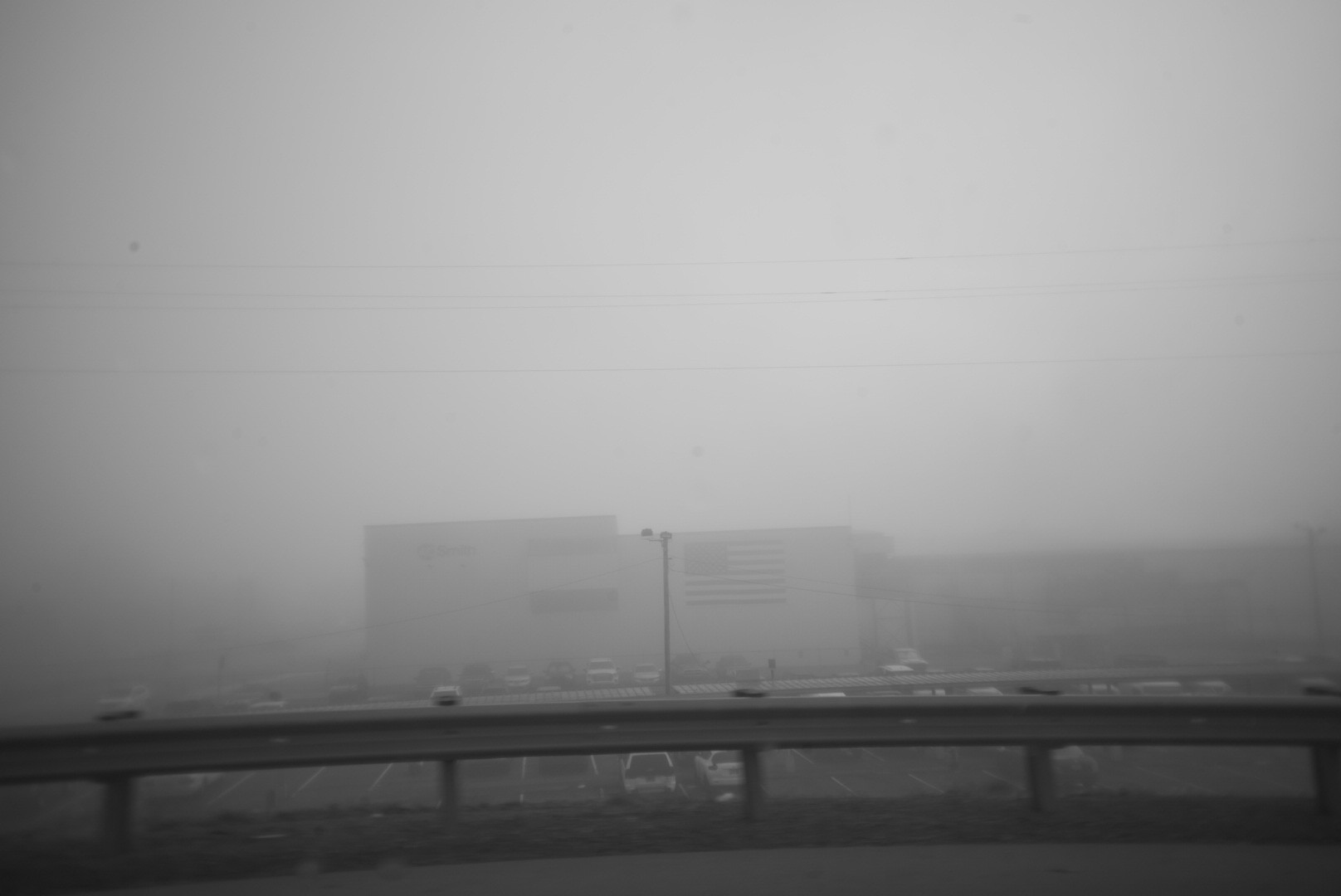
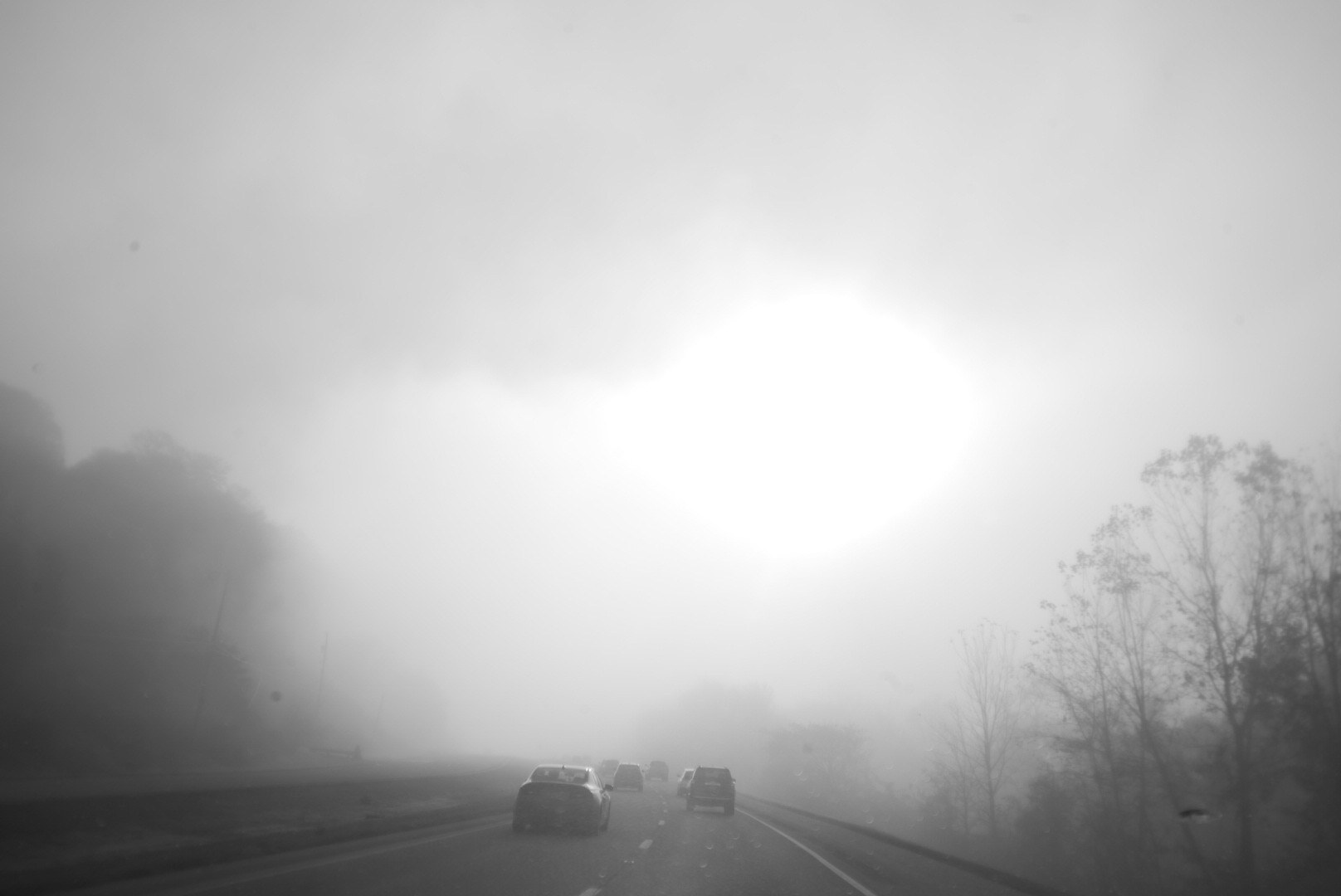
Thursday was fog. Real fog, the kind that moves. Past Dry Fork Creek and out Bull Run Road, I came over a high bridge with a sea of cloud underneath it. The clip notes scored it 8 out of 10, the highest of the day. That morning I worked out how I want the next pieces to feel: see what I see, then see what I saw. The glasses first, then the photograph.
WHAT'S NEXT
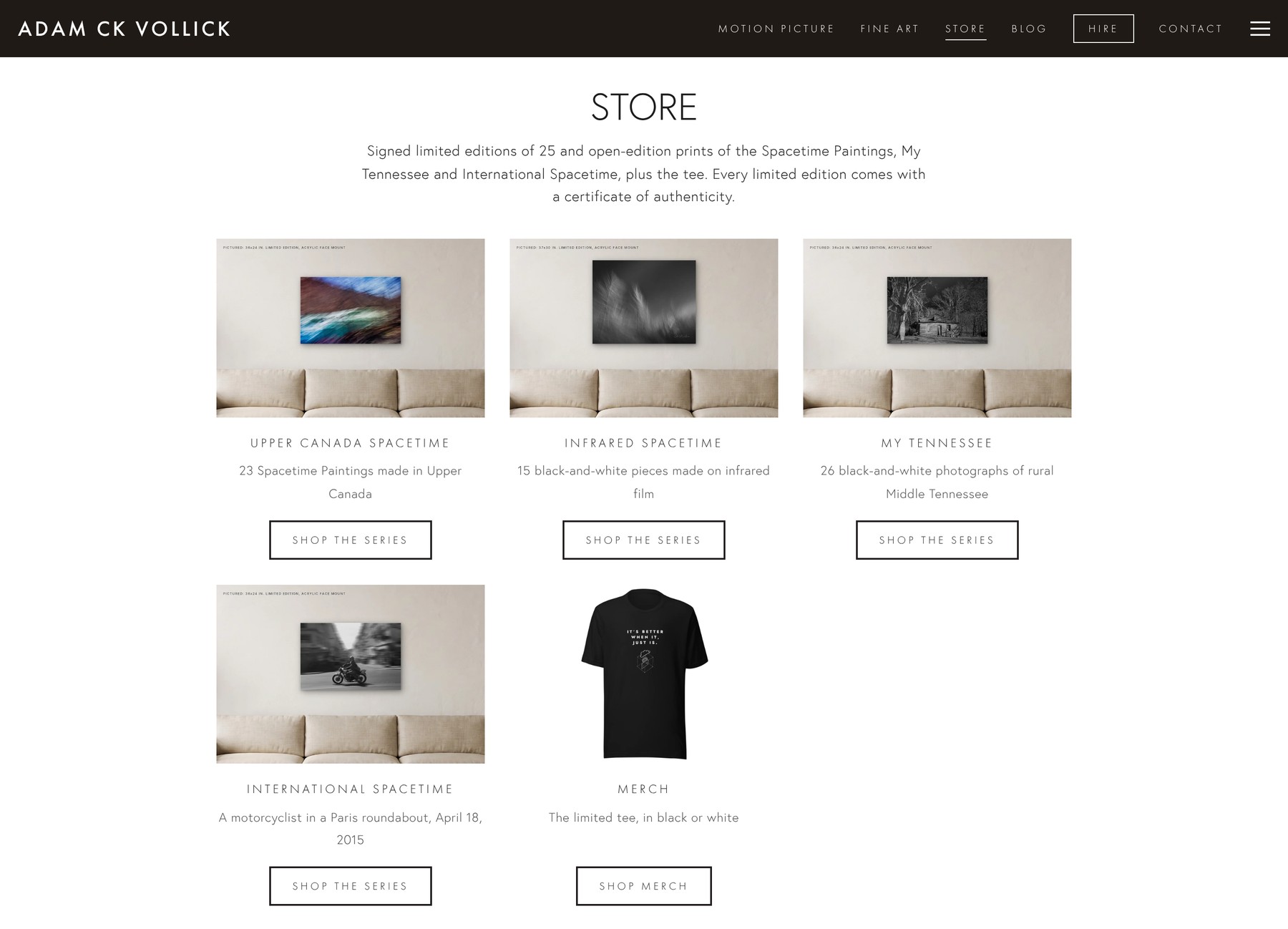
The store soft launches to friends this weekend. If you're up for poking at it on whatever browser or phone you've got, reply and tell me what breaks. Then a proper push next week.
There'll be a new piece up by the end of the day. As I said on camera Sunday, "I've been dicking around with AI all week trying to figure out how to make it cut my stories for me, I just keep stockpiling information as I work on the process." That stockpile is starting to pay off. The more it learns how I cut, the more often I'll be able to put something in front of you.
November's print code is POVNOV: 10% off any print at adamckvollick.com, one use per person, good through November 30.
CK
▶ Watch this clip in the letter on SubstackMORNING HAUNTS No.1 - Send notes. Its a living process.
Persistence of Vision
The letter is free, and it's staying free. I'm doing this for myself regardless. If it means something to you, a tip helps keep it going, and so does a print from the store. Either way, thank you for reading.